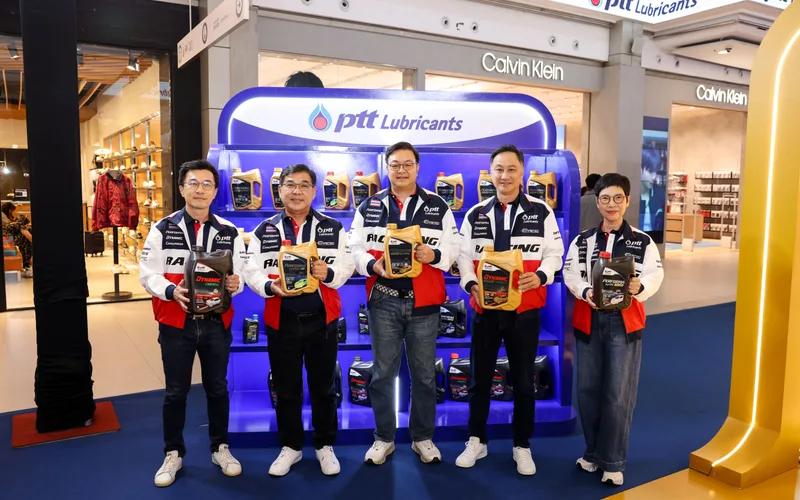
 DYNAMAX
Esters can be base stocks or formulation components. There is no established universal 10% naming threshold for all products; choose by finished-oil performance rather than ester wording alone.
Esters are not one additive
Esters form a broad chemical family with different feedstocks and synthesis routes. They are not all animal/vegetable fats or necessarily minor additives. Supplier portfolios include diesters, polyol esters and complex esters with varied properties; one viscosity or heat-resistance figure cannot describe them all.
Reference: Croda Lubricants Technology Overview, STLE, November 2017
Chemical names describe structure, not the whole finished oil. Esters may serve as base stock, solvency aid or friction-related component at different concentrations. Ester wording does not establish a pure-ester base. Petrochemical/biobased origin does not itself establish suitability; chemistry explains formulation choices rather than replacing eligibility.
Reference: Croda Lubricants Technology Overview, STLE, November 2017
Types and interpretation
| Type | Interpretation |
|---|---|
| Monoester | A structural class; properties depend on molecular design |
| Diester | Feedstocks and structure affect cold flow, viscosity and compatibility |
| Polyol ester | Polyol/acid combinations can be designed for particular applications |
| Complex ester | More complex structures, not universal engine superiority |
Do not rank monoesters below every polyol ester. Molecular size, branching and feedstocks affect design, with substantial variation within classes. Check the sample and method before transferring viscosity, pour-point or oxidation figures. Road oils combine stocks and additives, so material data needs formulation validation.
Reference: Croda Lubricants Technology Overview, STLE, November 2017
Why polarity and solvency matter
Ester structure can influence lubricity, additive solvency and formulation stability. Supplier examples show that ester selection and dose affect clarity and stability. Results depend on molecules, blends and additives; ester content alone cannot predict a thicker film, less wear or a fixed fuel saving.
Reference: Croda Lubricants Technology Overview, STLE, November 2017
Polarity/solvency can aid goals but are not unlimited benefits. Formulations balance lubrication, dispersion, compatibility and other performance. Adding raw ester cannot establish a stable compliant mixture, and original API/OEM evidence does not extend automatically. Metal-affinity wording needs relevant testing before broad start-up or duty claims.
Reference: Croda Lubricants Technology Overview, STLE, November 2017
Heat, hydrolysis and seals need formulation checks
Hydrolytic stability and material compatibility need evaluation, but esters cannot be labeled uniformly heat-unstable, inevitably water-sensitive or unusable as base stocks. Suppliers describe designs targeting hydrolytic stability. For road vehicles, use documented finished oils rather than pouring raw ester material into an engine.
Reference: Croda Lubricants Technology Overview, STLE, November 2017
Hydrolysis and heat behavior depend on molecules and formulation conditions. Moisture sensitivity does not mean inevitable engine failure or universal inability at high temperature. Supplier designs offer options, not guarantees for every oil. Emulsion, coolant loss or level anomalies need source diagnosis rather than being dismissed as normal ester behavior or fixed by another stock.
Reference: Croda Lubricants Technology Overview, STLE, November 2017
Content and price do not replace compliance
An ester-containing race oil lacking a road vehicle's emissions or OEM requirements is not suitable merely because it is expensive. Conversely, undisclosed ester content does not prove inferior quality. A synthetic finished oil still contains additives; a product name is not a performance test.
Reference: Shell: Fully Synthetic Motor Oils
Ask finished suitability, required evidence, meaning of ester wording and benefit tests. Undisclosed percentages do not authorize an invented authenticity threshold; disclosed percentages do not establish vehicle fit. An ester race oil lacking road emissions requirements remains unsuitable. Evaluate features separately from basic eligibility.
Service intervals and purchasing questions
Do not assign a universal 15,000 km, eighteen-month or after-every-race interval from ester content. Road, track and manufacturer conditions need separate planning. Ask for a specific PTT version's documented composition, claims and application, prioritizing suitability and diagnosing abnormal pressure, level loss or contamination.
Schedule service by vehicle and duty, including track-engine/event conditions, not universal race or long-drain rules. Retain version, fill, filter and date/distance. Investigate level changes rather than normalizing them as performance-oil evaporation. Match PTT documentation first, then price/supply; chemistry does not authorize extension or omitted diagnosis.
Frequently asked questions
Q1. Is 10% required to call an oil ester-based?
An unsupported percentage is not a universal definition; check the specific product description.
Q2. Are esters always better than PAO?
No. Base stocks can complement each other; finished performance and application determine suitability.
Q3. Does ester content extend drains?
Not automatically. Follow the applicable OEM and product conditions.
Sources and applicable limits
- Croda Lubricants Technology Overview, STLE, November 2017 — Supplier-authored overview of ester types, origins and formulation properties; not finished-oil certification. (Accessed 2026-10-08)
- Shell: Fully Synthetic Motor Oils — Finished oils combine synthetic base stocks and additives; Shell performance claims are not applied to PTT. (Accessed 2026-10-08)