 DYNAMAX
Transformer oil is primarily a dielectric and heat-transfer fluid, not general lubricant. Selection/service involves liquid, paper insulation, electrical equipment and sampling. Engine oil is not a substitute and color alone cannot determine replacement.
Distinguish transformers from generators
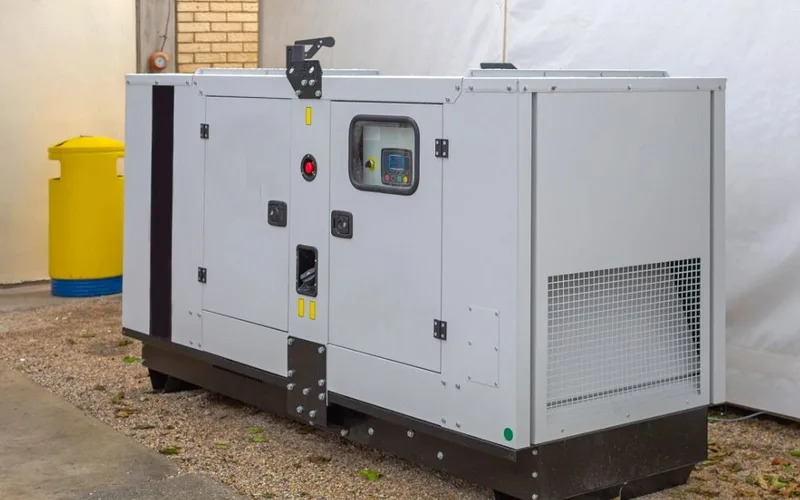
Transformers change electrical conditions such as voltage; electrical energy is not measured in tons, and their fluid does not lubricate a combustion engine. Oil-filled equipment uses liquid with solid insulation and cooling design; dry-type units have no equivalent fluid circuit. Generator sets may have engine oil, but it belongs to a different asset, duty and specification.
Reference: IEC 60422:2024 - Public scope and abstract · Nynas: How much water is there in my transformer?
Mineral, natural/synthetic ester and other dielectric liquids can differ in moisture behavior, materials, fire and service requirements. Environmental labels or flash point alone do not establish conversion suitability; the maker must assess design, seals, cooling and residual fluid. IEC 60422’s public scope covers mineral/related hydrocarbons, not universal numerical limits for esters.
Reference: IEC 60422:2024 - Public scope and abstract
Separate power-plant fluid duties
| Item | Decision and action |
|---|---|
| Transformer | Electrical insulation and heat transfer with specified dielectric liquid. |
| Steam/gas turbine | Bearing/control/gear duties by design, not automotive turbocharger oil. |
| Diesel/gas engine | Performance/ash by engine and fuel, not an assumption of impurity-free gas. |
| Compressors/pumps/hydraulics | Separate by components/circuits; oil-free compression may still have other lubricated parts. |
Reference: IEC 60422:2024 - Public scope and abstract · Cummins: Generator Fluid Analysis Program
Water in oil differs from water in paper
Moisture affects dielectric safety and paper aging, and liquid/paper hold different amounts. Nynas explains that solid insulation can retain far more water than the oil, so lower oil moisture does not establish a dry transformer. Temperature and condition affect interpretation; one ppm threshold should not be imposed on all units.
Reference: Nynas: How much water is there in my transformer?
Filtration, degassing, drying and replacement serve different purposes; paper-moisture treatment requires expert assessment. Clear oil does not prove electrical health, and darkness alone does not mandate total replacement. A plan must consider liquid quality, protection and internal insulation rather than promising all risks disappear with new fluid.
Reference: Nynas: How much water is there in my transformer? · IEC 60422:2024 - Public scope and abstract
Preserve sample representativeness
Authorized trained personnel must confirm equipment state, sampling point and electrical safety; there is no generic live-equipment DIY procedure. Use laboratory-specified containers/methods and exclude bubbles, external water, dirt and inappropriate headspace. EA Technology illustrates cleaned points, controlled filling and immediate labeling; its flush volume and fittings are kit-specific.
Reference: EA Technology: Transformer Oil Sampling Guide
Label asset, fluid type, point, time, oil temperature, load, top-ups and repairs. Preserve/ship to test requirements; gas-analysis and general-quality samples may differ. Disclose suspected contamination/bubbles rather than treating faulty sample figures as faults. Consistent methods are needed to track meaningful change.
Reference: EA Technology: Transformer Oil Sampling Guide · IEC 60422:2024 - Public scope and abstract
Oil quality and gassing diagnosis differ
A quality program may assess moisture, breakdown voltage, acidity and other properties, while dissolved-gas analysis offers thermal/electrical fault clues. Nynas studies liquid-specific thermal gassing, showing gas is not merely an oil-age indicator. Interpret with fluid type, sampling reliability, equipment history/trends and other electrical checks where needed.
Reference: Nynas: Transformer oil test rig - Tracing thermal faults · IEC 60422:2024 - Public scope and abstract
Specialists should classify reports and decide repeat tests, closer monitoring, outage inspection or repair. Trips, abnormal noise, smoke, major leaks and temperature alarms follow electrical incident/shutdown procedures; do not bypass protection or refill to restart. New fluid cannot repair internal electrical faults or remove isolation requirements.
Reference: IEC 60422:2024 - Public scope and abstract · Nynas: Transformer oil test rig - Tracing thermal faults
Accept procurement and treatment work
Provide model, voltage class, fluid type, capacity, specification, samples and service objective. Acceptance covers exact documents, batch, cleanliness, moisture-protected delivery, filling/treatment and before/after tests. Ordinary hydraulic or engine oils are not dielectric substitutes despite cooling/oxidation properties; verify specific PTT applications instead of inferring from generic industrial pages.
Reference: IEC 60422:2024 - Public scope and abstract · EA Technology: Transformer Oil Sampling Guide
For high moisture, first confirm temperature, sample quality/history and possible paper or water-ingress issues. Require objectives, outage/isolation, disposal, acceptance and follow-up. This distinguishes improving liquid from repairing equipment instead of assuming full replacement is the most reliable default.
Reference: Nynas: How much water is there in my transformer? · EA Technology: Transformer Oil Sampling Guide
Frequently asked questions
Q1. Is transformer oil a general lubricant?
Its primary duties are insulation/cooling; ordinary oil is not a substitute.
Q2. Does oil treatment prove dry paper insulation?
No; oil/paper moisture differs and requires specialist assessment.
Q3. Does abnormal DGA mean immediate replacement?
Verify samples and diagnose equipment/trends; fluid replacement cannot repair internal faults.
Sources and applicable limits
- IEC 60422:2024 - Public scope and abstract — Public scope confirms mineral insulating-oil supervision; no full-text numerical limits cited. (Accessed 2026-10-08)
- EA Technology: Transformer Oil Sampling Guide — Professional sampling against bubbles/contamination; equipment/procedure remain provider-specific. (Accessed 2026-10-08)
- Nynas: How much water is there in my transformer? — Water in oil versus paper insulation and treatment limits; no universal moisture threshold. (Accessed 2026-10-08)
- Nynas: Transformer oil test rig - Tracing thermal faults — Dielectric-fluid gassing and thermal-fault context, not universal drain thresholds. (Accessed 2026-10-08)
- Cummins: Generator Fluid Analysis Program — Consistent sampling and condition, wear and contamination assessment. (Accessed 2026-10-08)