 DYNAMAX
Finished engine oil already contains formulation additives. Extra treatment is not automatically needed and cannot restore mechanical wear or extend service automatically. Check OEM restrictions and a diagnosed need.
Extra treatment differs from factory additives
Finished oils combine base stocks and additives, with cleanliness, wear and other performance evaluated as a complete formulation. Pouring in another bottle changes that product rather than automatically completing missing protection. More treatment is not necessarily better.
Reference: Shell: Fully Synthetic Motor Oils
Formulation additives interact; their isolated functions cannot simply be added. Ratios, solubility and base stocks matter, and consumers cannot assume final performance after extra treatment. The original documentation concerns that finished oil, not arbitrary mixtures. Check whether an allegedly missing function already exists before spending without a defined goal.
Reference: Shell: Fully Synthetic Motor Oils
Separate claimed functions
Thickeners, friction modifiers, seal treatments and flushes serve different purposes. A flush may be intended for brief pre-drain use rather than staying in the sump. Changing viscosity or seal condition does not rebuild worn metal or establish restored compression.
Identify whether a product is a retained treatment, pre-drain flush, seal conditioner or thickener. Duration and removal requirements can differ. A short-run drain product must not remain until the next service, and seal treatment is not universal across systems. Ask for the targeted problem and procedure rather than treating all oil treatments alike.
Common expectations and checks
| Expectation | First check |
|---|---|
| Reduce oil burning | Consumption records, leaks, ventilation and mechanical condition |
| Remove noise | Level, pressure and noise source |
| Fill wear gaps | Mechanical diagnosis; liquid does not rebuild parts |
| Extend drains | OEM conditions and validation, not a bottle claim |
For consumption, record consistent levels, distance and top-ups before leak/engine inspection. For noise, log cold/hot and speed conditions. Quietness does not establish compression recovery. Oil films assist lubrication and sealing but do not restore worn dimensions; repair claims need diagnostic evidence, not viscosity feel or one listening test.
OEM restrictions and certification limits
Some manuals expressly discourage supplemental oil additives. Evidence for the original oil does not establish the properties of a modified mixture; wet-clutch and emissions compatibility also matter. Warranty consequences depend on actual terms and causation, not blanket assurances.
Reference: Ford Owner's Manual: Engine Oil Check
Check engine, aftertreatment and shared wet clutch, not merely synthetic-oil compatibility. Material-supplier information does not override an OEM restriction. Recommended base-stock pairing still needs complete vehicle eligibility. Retain treatment, dose and oil version for later diagnosis; marketing cannot guarantee unchanged warranty coverage.
Reference: Ford Owner's Manual: Engine Oil Check
Follow the exact product's dose and procedure
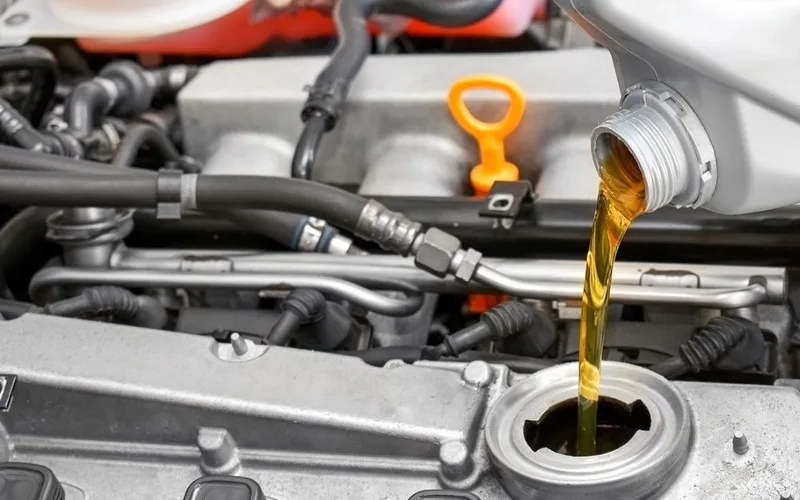
Where permitted, verify the fill point, total volume, drain requirement and safe temperature. A bottle added to an already full sump can overfill it; treatment volume counts toward the fill. Do not use generic warm-up, idle-time or six-month rules, or confuse it with fuel treatment.
Reference: Ford Owner's Manual: Engine Oil Check
Count original oil, top-ups and treatment in total volume. At maximum level, another bottle changes both fill and formulation rather than adding free protection. A workshop can arrange a permitted fill and any removal requirement. Avoid cap-measured guesses, doubled doses or pooled treatments; unclear instructions are unsuitable for routine experiments.
Reference: Ford Owner's Manual: Engine Oil Check
Decide whether the expense is justified
With no fault and suitable oil, prioritize correct level, filters and service records. For a defined problem, ask for diagnosis before an explanation of what a treatment addresses and how it will be evaluated. Less noise does not resolve an uninvestigated pressure fault, and PTT oils should not be assumed to require extra treatment.
Ask why this vehicle needs treatment, what supports it, how failure is judged and what comes next, rather than a mandatory frequency. Suitable oil, correct level and filters provide traceable maintenance. Treatment cannot replace mechanical repair; any permitted trial needs review conditions rather than another bottle whenever symptoms recur.
Frequently asked questions
Q1. Does a new vehicle need treatment?
Age alone is not a reason. Follow OEM requirements and need; finished oil already contains additives.
Q2. Can treatment make unsuitable oil compliant?
No. Requirements and approval do not arise automatically from an extra bottle.
Q3. What if too much was added?
Stop adding, record the product and total amount, and have a workshop check level and replacement needs.
Sources and applicable limits
- Shell: Fully Synthetic Motor Oils — Finished oils combine synthetic base stocks and additives; Shell performance claims are not applied to PTT. (Accessed 2026-10-08)
- Ford Owner's Manual: Engine Oil Check — Oil level, filling and supplemental-additive restrictions; a model-specific example, not a rule for every vehicle. (Accessed 2026-10-08)