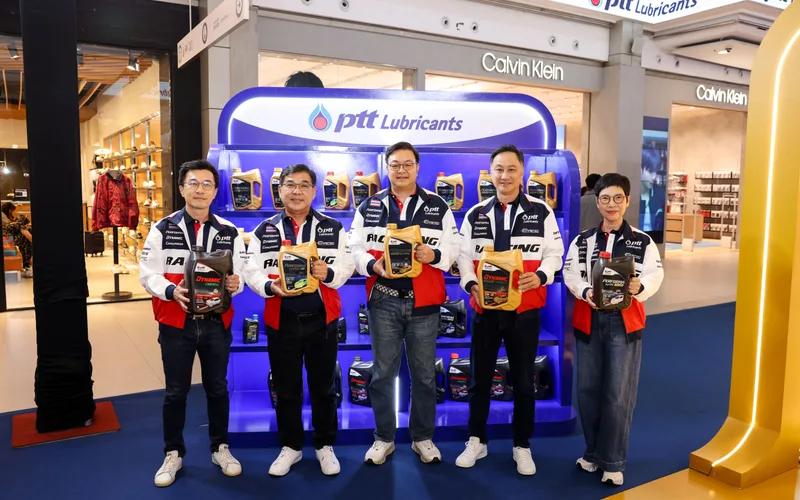
 DYNAMAX
A material's friction properties do not prove that a particular oil saves fuel, lasts longer or suits every engine. Check finished-oil requirements and test conditions.
Material applications of h-BN
Hexagonal boron nitride has a layered structure and can serve as a solid lubricant dispersed in oil. It differs from cubic boron nitride used in cutting applications. Supplier information supports a possible mechanism, not validation for every engine, filter and load.
Reference: Henze BNP FAQ: Boron Nitride and HeBoLub
Structure, particle form and formulation application are separate. A material's temperature resistance or conductivity does not predict proportional engine cooling after dispersion; concentration, contact, flow and cooling also matter. Consumers need finished-oil suitability and relevant tests, not a ceramic temperature figure treated as a vehicle performance table.
Reference: Henze BNP FAQ: Boron Nitride and HeBoLub
Finished formulation versus extra treatment
Evaluate a finished oil by its complete viscosity, performance and approvals. An extra treatment changes the mixture; the original mark does not certify it. Respect OEM restrictions and check wet-clutch friction needs.
Reference: Ford Owner's Manual: Engine Oil Check
A formulated oil requires its complete documentation and approvals; an extra bottle needs compatibility evidence for the mixture. Finished formulations already determine concentration and dispersion. Friction reduction does not establish wet-clutch safety, and a no-settling phrase does not replace distribution and long-term stability evidence matched to the product version.
Reference: Ford Owner's Manual: Engine Oil Check
Evidence comparison
| Evidence | Limit |
|---|---|
| Material conductivity and heat resistance | Cannot predict engine cooling or power |
| Bench friction test | Supports the tested formulation and conditions |
| Owner perceives less noise | Does not isolate fresh oil, grade or perception |
| Controlled vehicle and endurance test | Model, method and result scope still matter |
For bench reports, identify whether the sample is raw material, treated base oil or finished oil, then the reference, load, temperature, duration and metric. A wear result supports that condition, not engine life or extended drains without relevant endurance evidence. Curves lacking method, units and sample identity cannot predict extra vehicle mileage.
Compare fuel use and noise
Record route, load, tire pressure, weather and fill amount over multiple tanks; traffic can dominate one dashboard reading. Match speed, oil temperature and measurement position for noise. If both grade and oil freshness change along with treatment, a smoother feel cannot be attributed solely to boron nitride.
Stabilize suitable grade and service condition, recording season, traffic, tires and load. Simultaneous tire, injector and oil changes prevent attribution. Multi-tank records are not certification tests but reveal trends better than instantaneous economy. Report variation and conditions; inconsistent differences do not establish a component's benefit.
Evidence to request before buying
Request the data sheet, engine applications, finished-oil claims and reports. Extra treatments should document particle distribution, dispersion stability and filter/clutch compatibility. Obtain missing information before judging suitability. Match the exact PTT version to the vehicle requirements.
Separate basic eligibility from additional benefit. Eligibility covers grade, performance, approvals and friction compatibility; benefits need controlled tests and relevant scope. Attractive benefit claims cannot compensate for missing eligibility. Ask DYNAMAX Petrochemical LTD. to match exact PTT documentation to your requirements rather than importing material or other-product results.
A material name does not extend service
Boron nitride is not a universal repair for wear, low pressure or deposits. Retain OEM service conditions and diagnose warnings first. With correct oil already in use and no defined need, extra spending may have no demonstrated return.
Reference: Ford Owner's Manual: Engine Oil Check
Consider alternatives: diagnose level and mechanical causes for noise, or establish a measurable economy issue on matched routes. A healthy vehicle using suitable oil needs verifiable benefit rather than price or enthusiasm to justify extra treatment. Trials do not cancel service or diagnosis; retain product details if new warnings occur.
Frequently asked questions
Q1. Does boron nitride mean fully synthetic?
No. Material content and base-stock descriptions differ; neither replaces finished-oil requirements.
Q2. Are benefits always greater in old cars?
There is no universal evidence; fresh oil and vehicle condition may explain changes.
Q3. Can I choose oil by boron nitride content alone?
No. Verify the finished grade, performance, required approvals and suitability before evaluating relevant product or vehicle tests.
Sources and applicable limits
- Henze BNP FAQ: Boron Nitride and HeBoLub — Supplier explanation of boron nitride and oil dispersions; no proof of PTT formulation, fuel savings or approvals. (Accessed 2026-10-08)
- Ford Owner's Manual: Engine Oil Check — Oil level, filling and supplemental-additive restrictions; a model-specific example, not a rule for every vehicle. (Accessed 2026-10-08)