 DYNAMAX
Summer preparation focuses on tires, cooling, batteries, visibility and safe travel supplies. Heat or distance alone does not justify thicker engine oil. Complete vehicle maintenance, verify fluids and warnings, and protect occupants when overheating or faults occur.
Check early enough to fix problems
Allow time for repairs before a long trip rather than checking only at the fuel stop. Review maintenance and warnings, then inspect tires, fluids, lights, wipers and accessible belts/hoses. Recurring coolant loss, battery trouble or tire pressure loss needs diagnosis before departure. One top-up does not prove repair. Record noises, leaks and repair outcomes so the workshop can reproduce symptoms.
Reference: NHTSA: Summer Driving Tips
Heat and loading justify inspection, not unapproved fluid changes. Engine oil and coolant still require the correct specifications. Unknown mixtures or DIY air-conditioning circuit work can complicate repairs. For poor cooling, airflow or odor, check owner-serviceable filters and settings first and have the workshop handle further diagnosis, avoiding improvised compressed-air cleaning or pressurized-line disassembly.
Reference: NHTSA: Summer Driving Tips · Ford Owner Manual: Engine Coolant Check
Use cold pressures and the vehicle placard
NHTSA's summer guidance uses cold pressure from the vehicle placard, not the sidewall maximum. Pressure rises after driving; do not bleed hot tires down to a cold setting. Check the vehicle's loaded-use requirements and the spare or repair kit when carrying passengers and luggage rather than assuming short-trip performance proves long-trip readiness.
Reference: NHTSA: Summer Driving Tips · Michelin: Tire Maintenance
Inspect tread, sidewall damage, bulges, foreign objects and uneven wear, watching for repeated pressure loss. Structural damage needs tire-specialist assessment; dressing cannot conceal it safely. Uneven wear also calls for alignment, suspension and use checks. TPMS does not replace visual inspection and a gauge or authorize continued high-speed travel. Apply local requirements and manufacturer guidance rather than presenting US guide values as Taiwan law.
Reference: NHTSA: Summer Driving Tips · Michelin: Tire Maintenance
Cooling: check specifications and leakage cold
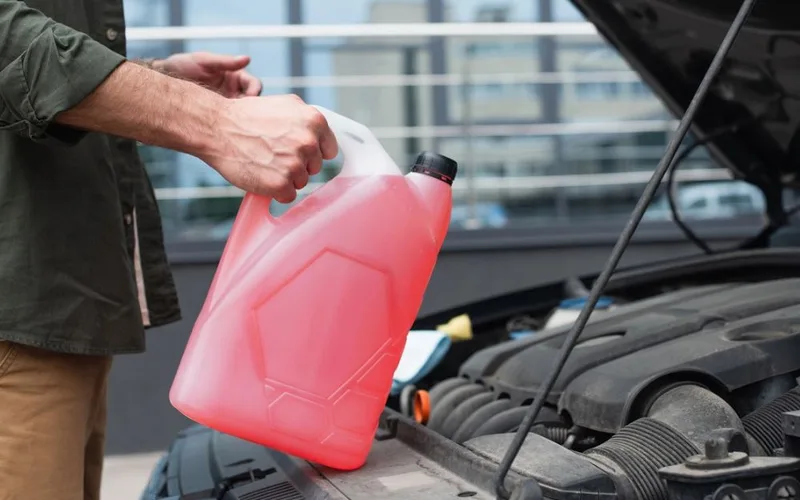
Check reservoir level, visible hoses, joints and ground leaks in the model's specified cold condition. Investigate low level and use the required coolant, not color matching. The Ford manual example specifies coolant and warns against mixing types; it also notes that some original colors can change in service. Color alone therefore does not establish identity or deterioration.
Reference: Ford Owner Manual: Engine Coolant Check · NHTSA: Summer Driving Tips
For temperature warnings, steam or obvious coolant loss, stop safely according to the owner manual instead of continuing to search for water. Hot systems are pressurized: do not immediately open radiator or expansion-tank caps or pour water over the hot engine as a repair. Electric fans may start unexpectedly. Follow vehicle instructions and roadside assistance for recovery decisions rather than treating a fixed waiting time as proof of safety.
Reference: Ford Owner Manual: Engine Coolant Check · NHTSA: Summer Driving Tips
Check battery and visibility separately
| Item | Decision and action |
|---|---|
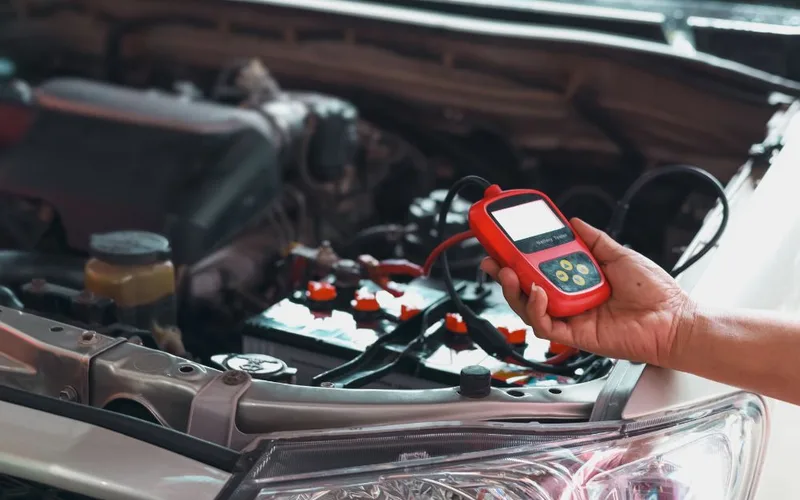
| Battery and starting | Check retention and terminals; have recurring slow cranking or discharge tested rather than assuming one charge proves health. |
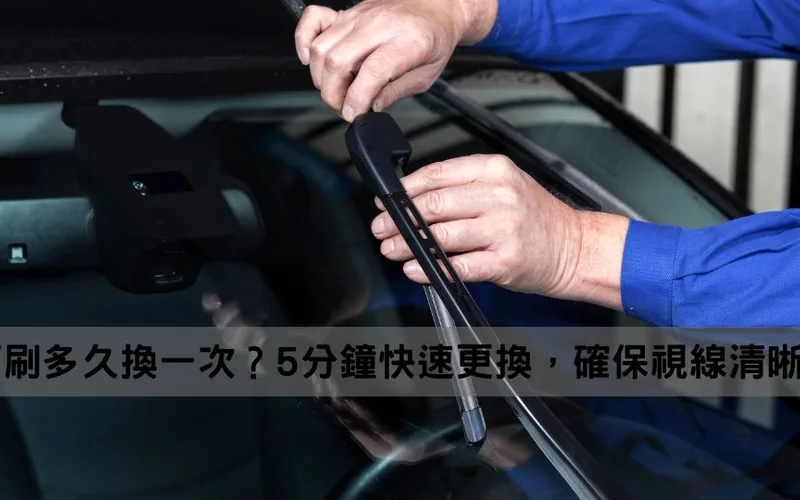
| Wipers and glass | Test wiping with washer fluid; address judder, streaks or detachment and verify connectors/service position. |
| Lighting and warnings | Check lighting and investigate new warnings; cycling the ignition is not a repair. |
| Cooling and leaks | Inspect cold; stop safely and seek assistance for overheating, steam or recurrent loss. |
Reference: NHTSA: Summer Driving Tips · Bosch Mobility Aftermarket India: Wiper Blades · Ford Owner Manual: Engine Coolant Check
Plan travel and protect occupants during faults
Carry water, necessary medication, phone power and roadside contacts, and plan breaks rather than masking fatigue with loud music. Do not leave children or dependent occupants in a parked vehicle, even briefly or with windows cracked. Secure luggage away from visibility and pedals; good maintenance does not remove weather, traffic or driver-state risks.
Reference: NHTSA: Summer Driving Tips
During a breakdown prioritize a safe stopping location, warnings and assistance, avoiding unfamiliar repairs beside traffic. Give the workshop the warning, speed/load, leak location and recent repairs. Without suitable tools and safe space, cooling, battery or tire problems belong with assistance services; an owner inspection list is not an instruction for roadside repairs.
Reference: NHTSA: Summer Driving Tips
Keep a simple record of tire readings, top-up products and repair findings with roadside contacts. If a fault recurs during the trip, provide those records so different workshops do not guess fluids or merely top up while missing the underlying problem.
Reference: NHTSA: Summer Driving Tips · Ford Owner Manual: Engine Coolant Check
Frequently asked questions
Q1. Should summer driving use thicker engine oil?
Not solely because of hot weather. Meet vehicle viscosity and performance requirements and investigate abnormal temperatures.
Q2. Can hot tires be bled to the placard pressure?
Do not do so directly. Placard values normally refer to cold conditions; measure accordingly.
Q3. Is a fixed wait enough to open a hot coolant cap?
There is no universal safe waiting time. Follow the vehicle's cooling instructions, do not open a hot pressurized system and seek assistance when uncertain.
Sources and applicable limits
- NHTSA: Summer Driving Tips — Trip pressure, cooling, batteries, visibility and occupant safety; US legal figures are not Taiwan limits. (Accessed 2026-10-08)
- Ford Owner Manual: Engine Coolant Check — Cold checks, specified coolant and concentration limits; figures apply to the covered vehicle. (Accessed 2026-10-08)
- Michelin: Tire Maintenance — Pressure, tread, damage, alignment and rotation; schedules remain vehicle-specific. (Accessed 2026-10-08)
- Bosch Mobility Aftermarket India: Wiper Blades — Blade fit, cleaning and installation tests; not Taiwan availability. (Accessed 2026-10-08)